
He Never Got Me a Card
A Mother’s Day reflection on pet loss, identity, and why we are still their parents after they’re gone.

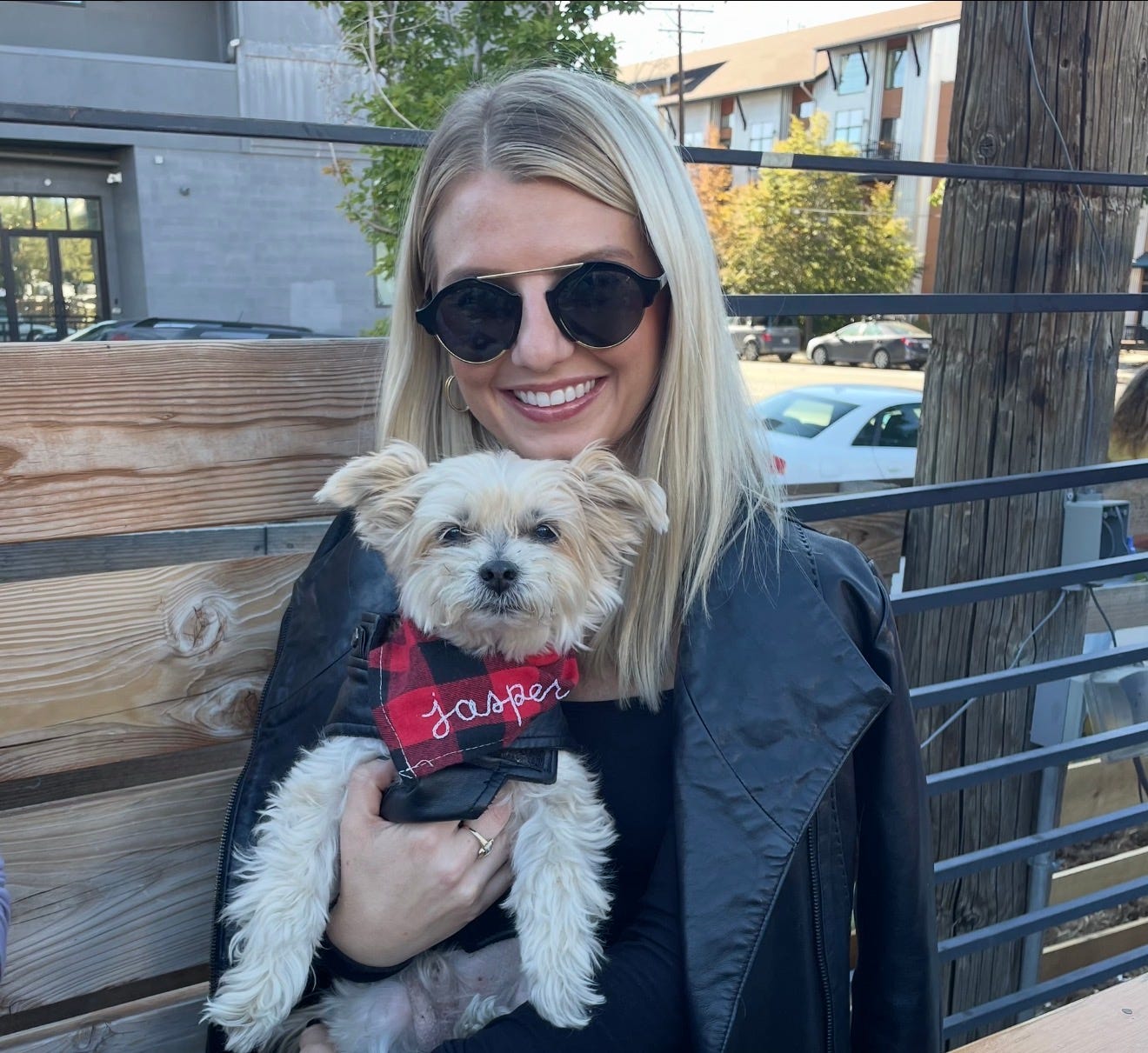
Jasper never got me a Mother’s Day card.
He never made me breakfast in bed. He never ordered flowers. He never said “Happy Mother’s Day.” And still, for 15 years, he made me a mom in every way that mattered.
I still clearly remember my first Mother’s Day without him in 2024. It was only a few months after Jasper died, and the day felt off before I even had language for why. It wasn’t like Mother’s Day had ever been some big production for us. There were no reservations, no gifts, no traditional markers of the holiday. But I woke up that morning with this lingering emptiness, an ache that I couldn’t quite place at first.
Eventually, it hit me that for 15 years, I had been Jasper’s mom. So without him physically here, who was I now? Was I still a mom? Was I still his mom? Was I allowed to claim that when I was no longer actively taking care of him in the ways the world could see?
I remember feeling almost afraid to say any of that out loud. Even in grief, you might start second-guessing yourself. Don’t say that. People will think you’re being dramatic. People will think you’re comparing pet loss to something you’re not allowed to compare it to. People will think you’re crazy.
But that’s the thing about pet loss. So much of it happens in silence because we are terrified that the depth of our grief will make other people uncomfortable. And holidays have a way of making that silence even louder.
Mother’s Day is complicated for a lot of people. It can bring up grief, longing, resentment, gratitude, uncomfortable family dynamics, infertility, estrangement, caregiving, loss, and love all at once. It is one of those days that gets packaged commercially as flowers and brunch, but emotionally, it can be so much more complicated than that.
For grieving pet parents, there is another layer that often goes unnamed. It is the grief of missing them, yes, but it is also the grief of wondering what happens to your identity when the one who made you a parent is gone.
Because for so many people, pet parenthood is not just a cute label. It is not only something printed on a mug or a sweatshirt, and it is definitely not some quirky personality trait. It becomes part of how you move through the world. Your days are shaped around them in ways you may not fully realize until they are gone. When you wake up, how long you stay out, what you worry about, what makes the house feel full, what gives you a reason to get up when everything else feels heavy. Over time, that love becomes woven into your identity so completely that when they die, you are not only grieving their absence—you are grieving the version of yourself that existed when they were still here.
Pet loss is not just the loss of who they were. It is the loss of who you were with them.
For 15 years, Jasper gave me a role I never had to explain to myself. I was his person, his protector, his home—and yes, I was his mom. After he died, the routines that had structured my life disappeared almost overnight. No one was waiting for me to wake up or follow me from room to room. No one needed breakfast, medicine, a walk, a check-in, or the thousand tiny acts of care that had become so automatic I barely realized they were holding my days together.
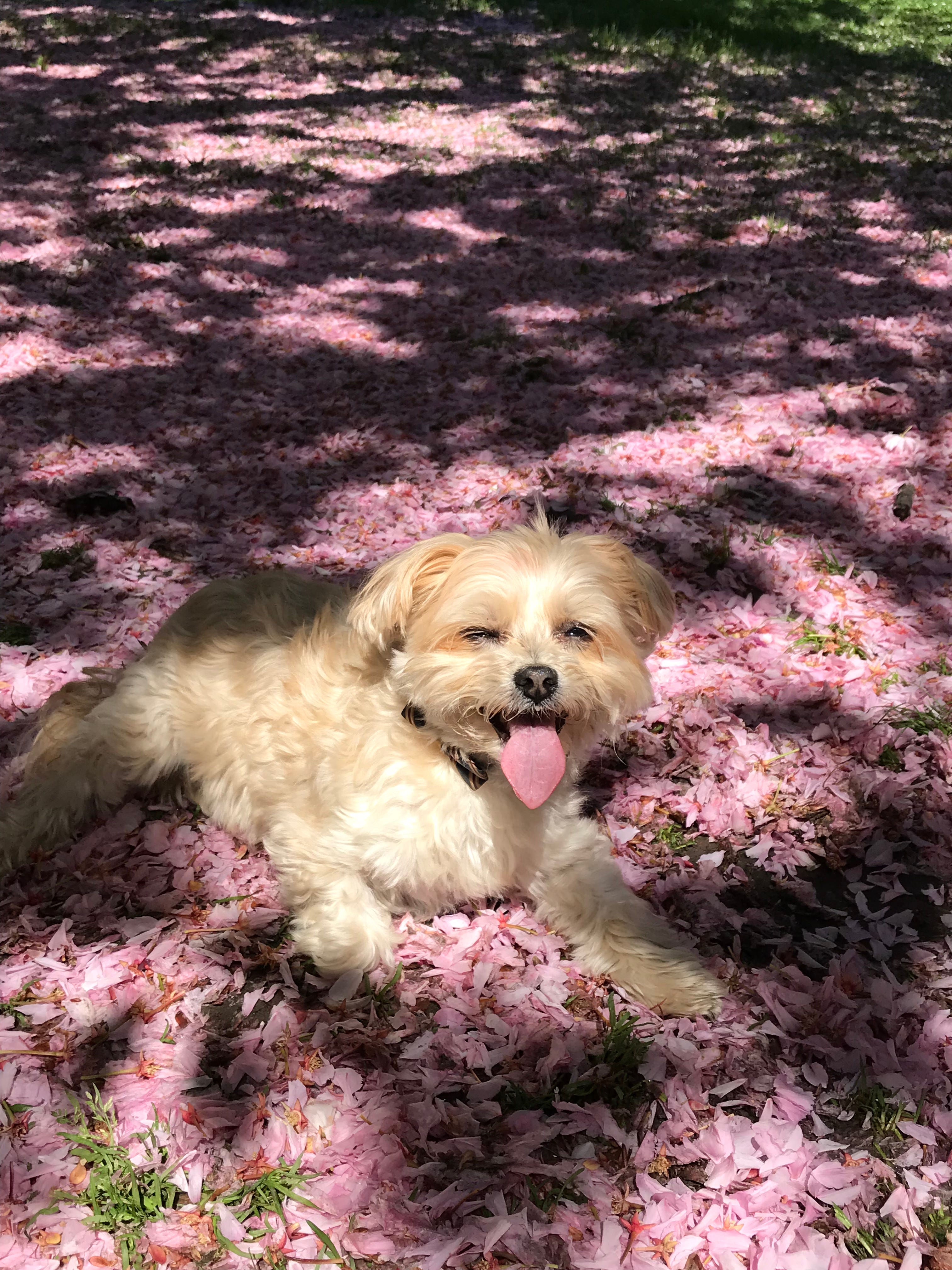
That is what makes this kind of grief so disorienting. The day-to-day caretaking stops, but the relationship does not. Their body is no longer here, but the bond is still very much alive, and you are left trying to understand what it means to still feel like their mom when the world no longer sees you mothering them.
I think Mother’s Day can bring that tension to the surface in a really painful way. It asks the world to celebrate a role that, for grieving pet parents, may suddenly feel invisible. There is no school craft coming home in a backpack, no brunch reservation, no card signed with a paw print, no socially accepted ritual that says, I know this day might hurt for you too.
But it does hurt, and it makes sense that it hurts, because for so many of us, pet parenthood is not symbolic. It is real, daily, embodied care.
To be clear, pet care does not need to compete with anyone else’s version of motherhood or fatherhood. Pet parenthood is simply a different kind of parenthood. We love them, care for them, sacrifice for them, build our days around them, worry about them, and make impossible medical decisions for them out of love. We learn their moods, their needs, their sounds, their routines, and the look in their eyes when something is wrong. That kind of commitment is not casualIn fact, for so many of us, they are family in the deepest, most lived-in sense of the word.
In 2023, Pew Research Center published data on pet ownership in the U.S. They found that 97% of U.S. pet owners consider their pets part of their family, and 51% say their pets are as much a part of the family as a human member. And it’s not just Americans. Globally, the human-animal bond is just as strong. Approximately 94% of pet owners consider their pet a part of their family and 92% said they could never be convinced to give them up.
So when I say they are family, I mean that when a pet dies, we are not simply losing an inanimate object, a casual hobby, “just a dog,” or “just a cat.” For many, we are losing the closest thing we had to a child, a partner, a daily companion, a witness, a purpose, or a safe place.
And when the world refuses to acknowledge the role our pets played, it does not make the grief smaller. It makes the grief lonelier.
It’s days like Mother’s Day that can bring up the ache of no longer being needed in the same way. Father’s Day can do that too. So can birthdays, adoption days, gotcha days, holidays, anniversaries, and random Tuesdays when the house is too quiet. These dates can crack something open because grief is not linear, and love does not follow a calendar.
One day you are functioning, and the next you’re standing in the dog food aisle crying because, for half a second, your body forgot you don’t need to buy their food anymore. After they die, we are not only learning how to live without them. We are learning how to live without the version of ourselves that loved them in real time, the version with the routine, the leash by the door, the medication schedule, the little shadow following behind, and the daily proof that our care mattered to someone.
Rebuilding after that kind of loss is not dramatic. It is human.
You do not stop being their mom because they died. You are their mom because they lived.
I wish someone had said that to me sooner. I wish every grieving pet parent heard it before the holiday hit. You are still their mom, their dad, their person, their parent, their home. You are still the one who knew them best, the one who carries their story, and the one whose life was permanently shaped by having loved them. Death changes the form of the relationship. It does not erase it.
And I know this in a new way now, too, because I am a dog mom again. Theo has brought love, life, chaos, and tenderness back into parts of me that I wasn’t sure would ever feel alive again. And while bringing him into my life forced me to rapidly adjust—as we all must do with any new member of the family—I quickly learned that being Theo’s mom did not make me less Jasper’s mom. It did not replace that bond or close that chapter neatly. If anything, Theo has taught me that love expands, even while grief lingers.
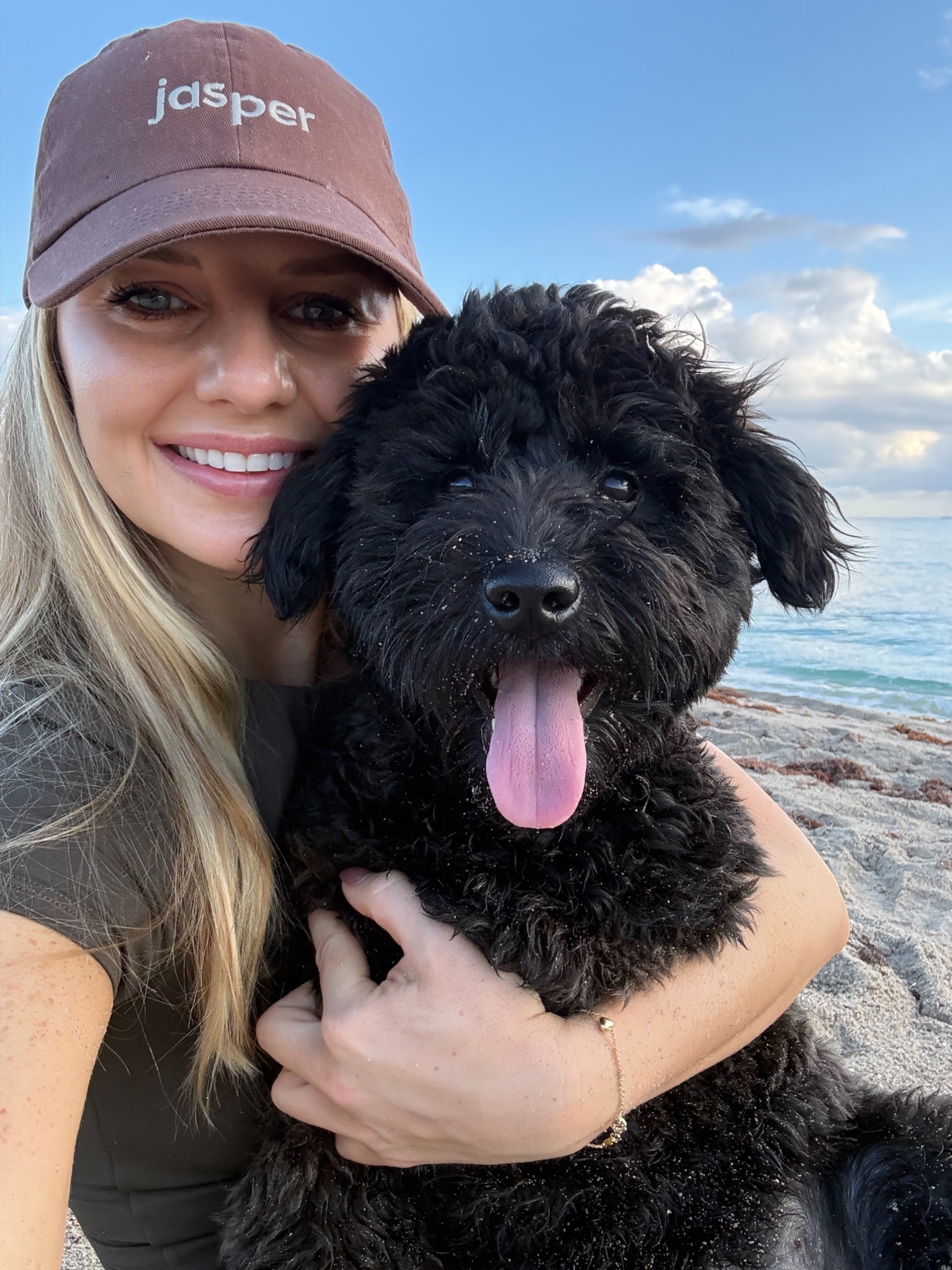
Being Theo’s and Jasper’s mom has become my new identity.. One relationship is alive in my daily routines, and the other lives in my memory, my body, my story, and the way I love now. They are different, but they are both real.
So ahead of Mother’s Day, I want to say this clearly. If this day feels complicated for you, you are not alone. If you feel grief, jealousy, confusion, anger, tenderness, numbness, or nothing at all, you are not doing it wrong. If you are grieving the pet who made you a mom, that grief is real. If you are grieving the routines that gave your life meaning, that grief is real. If you are grieving the identity you had when they were here, that grief is real.
And if part of you is scared to say, “I’m still their mom,” say it anyway. Whether you have opened your heart to another pet or cannot even imagine doing that yet, you are still theirs, and you always will be.
Finally, if you love someone who has lost a pet, especially someone facing their first Mother’s Day, Father’s Day, or meaningful holiday without them, please don’t overthink it. Reach out. Say their pet’s name and acknowledge the day. A simple message can be enough: Thinking of you and Jasper today. I know Mother’s Day might feel complicated this year. You’ll always be his mom.
Jasper never got me a card. He never said “Happy Mother’s Day.” He never made a reservation or wrapped a gift or wrote some sentimental caption about how lucky he was to have me. But for 15 years, he made me a mom in all the ways that mattered. He gave me someone to care for, someone to come home to, someone to protect, someone to build a life around, and someone to love with my whole heart.
And even though he is gone, that part of me is not.
I am still Jasper’s mom. I will always be Jasper’s mom. And if you are missing the one who made you a parent, you are still theirs too. 🤎
Wonderfully well-written Britta!